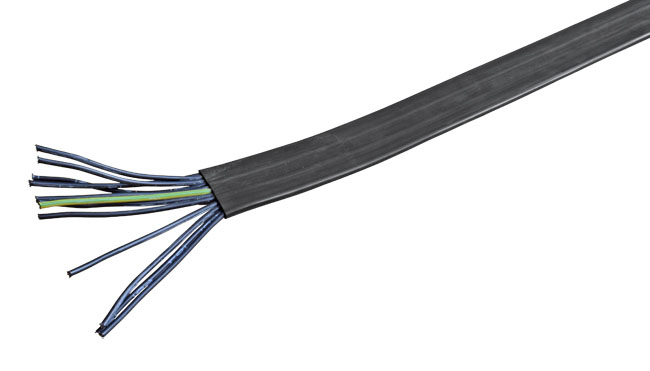
When it comes to overhead crane systems, one of the most overlooked components-until it’s too late-is the pendant cable. While we often focus on motors, hoists, and load-bearing elements, the cables that deliver power and control signals are equally critical. One failed cable can lead to surprise downtime, expensive repairs, and even create serious safety hazards. Experts would tell you that one of the best ways to spot problems before they escalate is to keep a close eye on your C Rail and Accessories.
The following are five warning signs to watch for, along with practical guidance for preventing full failures.
Trolleys and Clamps Showing Excessive Wear or Abrasion
One of the earliest signs that a pendant cable is being stressed is visible wear on the components that guide it. The trolleys, clamps, and cable carriers that comprise your C Rail and Accessories system are often the first to bear the brunt of motion and friction. Being able to identify the pattern of wear can point to the root cause:
- Scoring, grooves, or scratches where the cable rubs against the C Rail metal surfaces. This often indicates that a key accessory, the trolleys, is binding, or the cable has jumped the track.
- Frayed edges on clamps or rollers. This shows that the cable is constantly being cut or abraded, perhaps because of a sharp edge on a worn-out metal component.
- Uneven wear patterns on trolley wheels due to misalignment or uneven tension. Due to improper tracking, the cable will eventually experience wear on the cable sheath itself.
When you see these symptoms, it typically indicates that the cable is being pulled at awkward angles or experiencing friction it shouldn’t have to. Given time, that will lead to insulation degradation, conductor breakage, or even complete failure. In a high-cycle operation, such as in a busy packaging line or automotive assembly plant, this can get very expensive.
Twisting, Kinking, or Unnatural Cable Loops
Pendant cables are designed to flex within certain parameters, but misaligned rails or poorly positioned accessories can cause twisting or kinking. Such stress progressively damages the insulation and internal conductors, often before visible signs appear on the outside. This type of damage is particularly insidious since it works on the internal integrity of the cable. Watch for these warning signals:
- Twists or loops form along the cable path rather than a smooth, uniform festoon. This is a common indication that the towing trolley (the accessory pulling the system) is not in proper alignment with the machine.
- Permanent bends or creases in the cable sheath. This indicates plastic deformation of the cable from excessive bending force, most commonly caused by a trolley or end clamp accessory being placed too close to a fixed point.
- Resistance or uneven tension in moving the crane.
The repeated twisting of a cable can lead to internal copper strand fatigue and failure, creating an intermittent electrical issue. This is most likely to occur at those locations where a C Rail and Accessories system has uneven trolley spacing, worn rollers, or insufficient slack. The early detection of such could prevent both unplanned downtime and electrical hazards.
Intermittent Electrical Issues or Erratic Crane Responses
Not all warning signs are visible. A pendant cable in the early stages of failure often shows up through the performance of the system rather than through its appearance. The electrical problems are usually the result of fatigue fractures in the copper conductors due to repetitive, undue mechanical stress within the C Rail system. You might notice:
- Intermittent control signals or unresponsive buttons. This is the classic symptom of a conductor or control wire breaking and making contact only sporadically.
- Flickering lights on the control pendant show inconsistent power delivery.
- Motors that act erratically during a crane operation may delay or completely stop at any time.
These often indicate problems where the cable runs through tight, misaligned sections of your C Rail and Accessories, or where the cable strain relief, a type of accessory, has failed, allowing movement at a fixed point. Early detection here enables corrective action before a total cable failure brings your operations to a standstill. Even minor electrical issues can quickly get out of hand if not dealt with in a timely manner, especially in high-use environments like 24/7 production lines.
Noise or Unusual Resistance During Movement
Another major indicator of imminent failure is sound and movement. Observe the smoothness of the travel of the pendant cable along the rail system while inspecting the crane. Any resistance or noise unusual in nature may raise a flag. Watch for:
- Squeaking, grinding, or scraping during travel. This is most often due to worn trolley wheels or trolley cable debris accumulation within the C Rail channel. These worn accessories can form sharp edges through which the cable sheath may quickly chew through.
- Increased tension to actuate the crane was required. This presupposes binding emanating from friction. Friction could be due to worn or unlubricated trolleys, or their track coupler is grossly misaligned, a common accessory on C Rail.
- Sudden jerks or irregular travel of the cable. This indicates that the cable is momentarily catching on a discontinuity in the track or a damaged accessory before being pulled clear.
These issues often stem from worn trolleys, misaligned accessories, or friction points within the system. Addressing these problems in a timely manner not only preserves the pendant cable but also reduces wear on the entire crane system, improving safety and reliability.
Visible Cable Damage or Exposed Conductors
The most obvious warning sign is physical damage to the pendant cable itself. Cracks, cuts, or exposed conductors are critical issues that demand immediate attention. Common causes include:
- Sharp edges or misaligned parts on the C Rail and Accessories. Example: A trolley that has derailed and is cutting the cable against the edge of the C Rail.
- The excessive abrasion from high-cycle operations where the cable is allowed to drag or rub against adjacent machinery or structure indicates that a trolley spacing accessory configuration is incorrect.
- Chemical or environmental exposure in harsh industrial settings results in the outer jacket stiffening, cracking, and losing its protective qualities, thus making it vulnerable to mechanical damage within the C Rail.
If any of these signs are observed, replacement or repair should be done immediately. Defective cables, if ignored, result in electrical shorts, failure of motors, and severe safety hazards related to the potential for electrocution for operators of that machinery. Even minor cuts or abrasions should not be treated lightly to avoid further damage.
Practical Maintenance Tips for Pendant Cable and C-Rail Systems
Keeping your pendant cable and supporting rail system in prime condition does not have to be complicated. Follow these recommendations:
- Daily, weekly, and monthly inspections are necessary for the trolleys, clamps, rollers, and cable sheaths. Inspect for wear, misalignment, or uneven tension. Check that the accessory ‘End Stop’ is securely fixed to prevent overrun.
- Lubricate the track’s moving parts, such as trolley wheels and bearings, with manufacturer-recommended lubrication. This will minimise friction and wear on these accessories. In fact, proper lubrication of these accessories directly prevents damage to the cable.
- Allow the proper slack in the cable along the rail to avoid spikes in tension or kinking while the crane is moving. The slack length depends upon the spacing of trolley accessories on the C Rail.
- Mispositioned trolleys, track couplers, and guides should be realigned immediately. Worn accessories should be replaced before they compromise the pendant cable. A failing $10 accessory can destroy a $500 cable.
Regular inspection and maintenance prevent not just cable failure, but also promote overall crane performance, reduce downtime, and protect operator safety.
Conclusion: Act Before Failure Strikes
Personal experience has shown many times that the difference between smooth crane operation and unexpected failure often boils down to how closely you monitor your C Rail and Accessories and the pendant cable. The whole festoon system is an interconnected unit; the condition of the metal and plastic accessories directly decides the life and reliability of the flexible cable. Look out for these five warning signs and implement a maintenance routine.