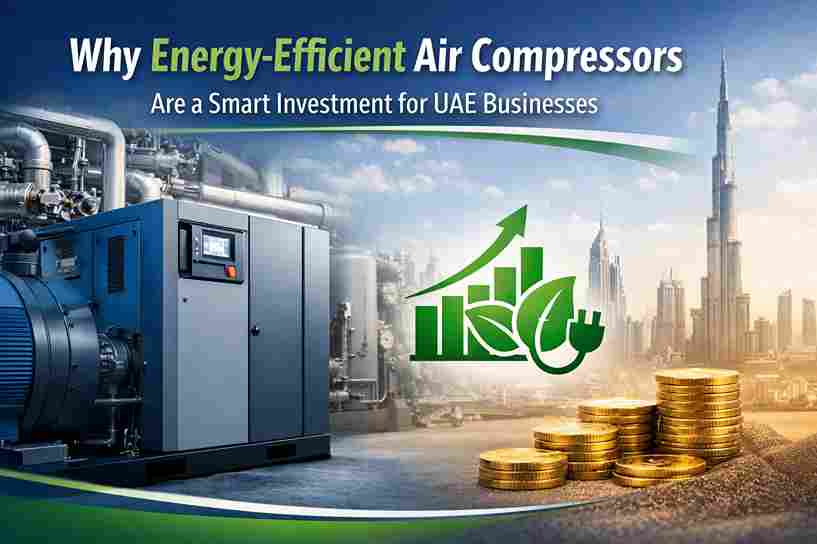
In the UAE’s fast-paced industrial and commercial landscape, operational efficiency is no longer optional—it is a strategic necessity. From manufacturing plants in Dubai to construction projects in Abu Dhabi and logistics hubs across Sharjah, compressed air plays a critical role in daily operations. However, many organizations still rely on outdated, power-hungry systems without realizing how much they are overspending.
This is where the air compressor becomes more than just a piece of equipment. Energy-efficient air compressor systems offer UAE businesses a practical way to reduce electricity consumption, control operating costs, and align with national sustainability goals. This article explains why upgrading to an energy-efficient air compressor is a smart long-term investment, how it impacts your bottom line, and what decision-makers should consider before making the switch.
Understanding Energy Efficiency in an Air Compressor
An air compressor converts electrical energy into compressed air, which is then used to power tools, machinery, and processes. In many facilities, compressed air accounts for 10–30% of total electricity usage, making it one of the most energy-intensive utilities.
Energy-efficient air compressor systems are designed to:
- Minimize energy losses during compression
- Optimize air delivery based on actual demand
- Reduce unnecessary run-time and idle power consumption
Technologies such as variable speed drives (VSD), high-efficiency motors, and advanced control systems allow modern air compressors to adapt to fluctuating workloads—something older fixed-speed models simply cannot do.
Why Energy Costs Matter More in the UAE
Electricity costs in the UAE, while competitive globally, are still a major operational expense for industrial users—especially when air compressors run continuously. Additionally, rising awareness around energy conservation and carbon reduction is influencing procurement decisions across sectors.
Key UAE-specific considerations include:
- High ambient temperatures, which increase cooling loads and reduce compressor efficiency
- Extended operating hours in manufacturing, oil & gas, and construction sectors
- Government-led sustainability initiatives, such as UAE Net Zero 2050
An energy-efficient air compressor helps offset these challenges by operating reliably under high temperatures while consuming significantly less power.
The Financial Case: Lower Operating Costs and Faster ROI
The initial purchase price of an energy-efficient air compressor may be higher than a conventional model, but the lifecycle cost tells a very different story.
Industry data consistently shows:
- Up to 70% of an air compressor’s lifetime cost comes from energy consumption
- Energy-efficient models can reduce electricity usage by 20–40%
- Typical payback periods range from 12 to 36 months, depending on usage
For example, a medium-sized manufacturing unit in the UAE running an air compressor 16 hours a day can save thousands of dirhams annually simply by switching to a VSD-based system. Over 8–10 years, the cumulative savings far exceed the upfront investment.
Improved Reliability and Reduced Downtime
Energy-efficient air compressor systems are not only about saving power—they are also engineered for durability and consistency.
Key benefits include:
- Lower operating temperatures, reducing wear on internal components
- Smart monitoring systems that detect inefficiencies early
- Fewer breakdowns and unplanned shutdowns
In industries where downtime can cost thousands of dirhams per hour, reliability is just as important as efficiency. A modern air compressor supports predictable operations and better maintenance planning.
Supporting Sustainability and ESG Goals
Sustainability is becoming a core business priority in the UAE, especially for companies working with government entities or multinational partners. Energy-efficient air compressor systems directly support Environmental, Social, and Governance (ESG) objectives by:
- Reducing carbon emissions linked to electricity usage
- Improving overall energy efficiency ratings
- Demonstrating commitment to responsible operations
With increasing emphasis on green buildings, sustainable manufacturing, and environmental reporting, upgrading your air compressor system is a practical step toward compliance and brand credibility.
Advanced Technology That Adapts to Real Demand
Traditional air compressors operate at full capacity regardless of actual air demand, leading to wasted energy. In contrast, energy-efficient systems use intelligent controls to match output with real-time requirements.
Notable advancements include:
- Variable Speed Drive (VSD) technology that adjusts motor speed
- Smart controllers that balance multiple compressors in a network
- Leak detection and energy monitoring for continuous optimization
These features are especially valuable in UAE facilities where demand fluctuates between shifts, seasons, or production cycles.
Choosing the Right Air Compressor for Your Application
Not all energy-efficient air compressor systems are the same. Selecting the right solution depends on your industry, usage pattern, and operating environment.
Before investing, consider:
- Required pressure and airflow (CFM)
- Duty cycle and daily operating hours
- Ambient temperature and ventilation conditions
- Oil-free vs. oil-lubricated requirements
A proper energy audit and load assessment can help identify the most suitable air compressor configuration, ensuring maximum efficiency and return on investment.
Real-World Insight: Small Change, Big Impact
A logistics warehouse in the UAE replaced two aging fixed-speed compressors with a single energy-efficient VSD air compressor. Within the first year, the facility reported:
- A 28% reduction in electricity consumption
- Noticeably quieter operations
- Improved air quality and pressure stability
This example highlights a common outcome: better performance with fewer machines and lower energy costs.
Conclusion: A Smart Investment with Long-Term Benefits
An energy-efficient air compressor is not just an equipment upgrade—it is a strategic investment. For UAE businesses facing rising energy demands, sustainability expectations, and competitive pressures, the benefits are clear: lower operating costs, improved reliability, and alignment with future-focused business practices.
Whether you operate a factory, workshop, or large commercial facility, upgrading your air compressor system can deliver measurable value year after year.