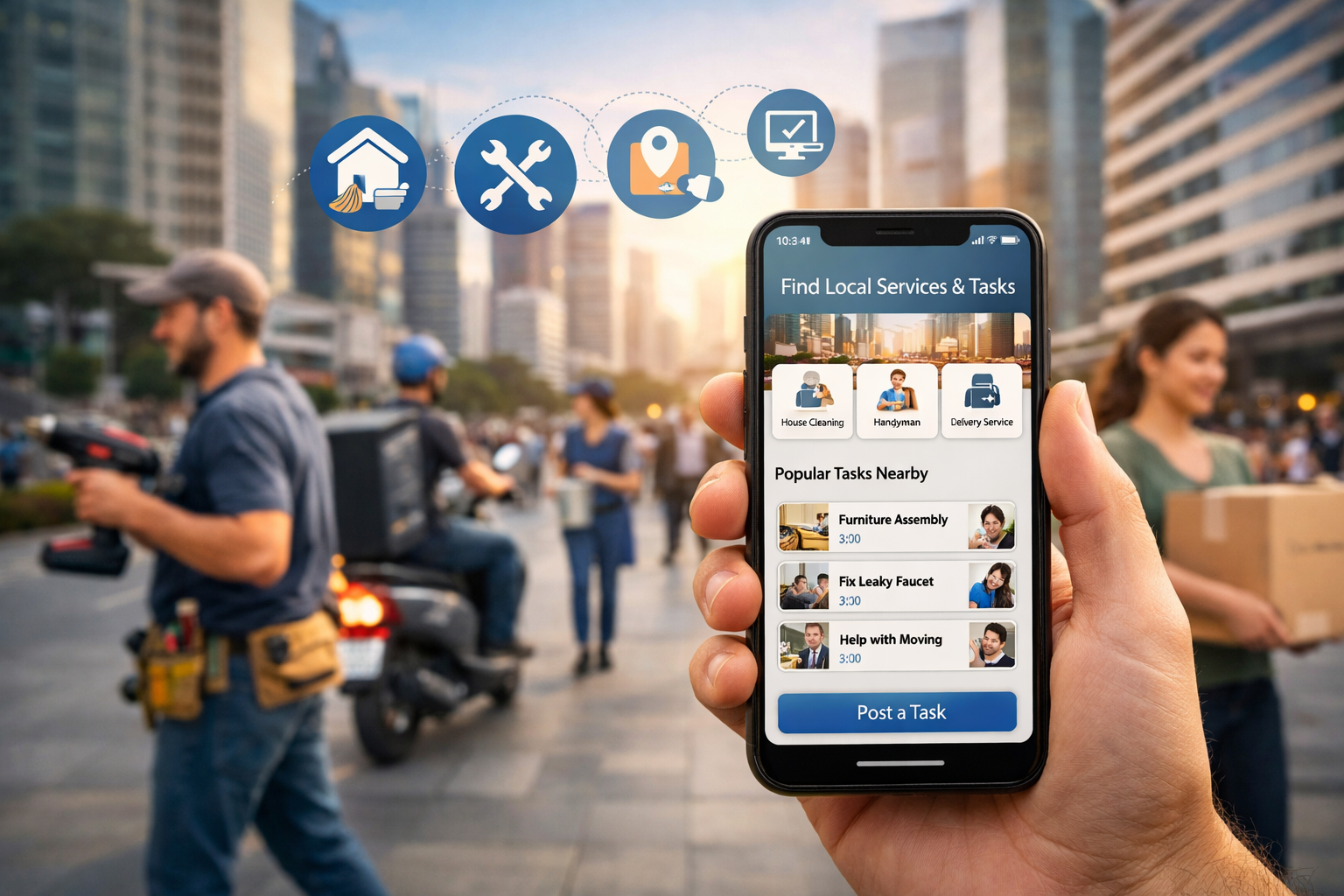
The on-demand services economy has evolved far beyond food delivery and ride-hailing. By 2026, task-based marketplaces are becoming a core part of urban and semi-urban digital infrastructure. Platforms inspired by Airtasker connect individuals and businesses with skilled workers for everyday services such as home maintenance, cleaning, logistics, IT support, and creative work. For startups, building an Airtasker Clone represents a practical entry point into the growing gig economy, provided the platform is designed with scalability, trust, and regional adaptability in mind.
Table of Contents
ToggleUnderstanding the On-Demand Task Marketplace Model
An Airtasker-like platform functions as a two-sided marketplace. On one side are task posters, including individuals and small businesses seeking services. On the other side are taskers, such as freelancers, blue-collar workers, and micro-entrepreneurs, offering their skills on demand.
Revenue generation typically comes from service fees, commissions, subscriptions, featured listings, or value-added services. By 2026, successful platforms are those that go beyond simple job matching and offer end-to-end task lifecycle management, from discovery and booking to payment and dispute resolution.
Why 2026 Is a Strategic Year for Launching an Airtasker Clone
Post-Pandemic Workforce Shifts and Gig Economy Maturity
Remote work normalization and flexible employment models have permanently altered workforce expectations. Many professionals now balance full-time roles with freelance or task-based income streams. This creates a stable supply of service providers for task marketplaces.
Rising Demand for Hyperlocal Services
Urbanization and busy lifestyles are driving demand for local, quick-response services. Users prefer platforms that can connect them with verified professionals within their vicinity, creating strong opportunities for region-focused Airtasker Clone platforms.
SME and Startup Adoption of Task Platforms
Small and medium-sized enterprises increasingly outsource short-term operational tasks instead of hiring full-time staff. Task marketplaces serve as cost-effective solutions for SMEs, expanding the customer base beyond individual users.
Market Opportunities for Startups Building an Airtasker Clone
Niche-Focused Task Marketplaces
Instead of launching a generic platform, startups can focus on specific industries such as home services, healthcare support, logistics, event management, or IT maintenance. Vertical specialization allows faster user acquisition and stronger brand positioning.
Emerging Markets and Tier-2 Cities
While mature markets are competitive, emerging economies and tier-2 cities remain underserved. Localized Airtasker Clone platforms that support regional languages, payment methods, and pricing sensitivities can capture early market share.
B2B Task Marketplaces
Enterprise-grade task platforms designed for corporate clients, facility management companies, or co-working spaces present high-value opportunities. These platforms prioritize compliance, reporting, and workforce management features.
Core Features Required in a 2026-Ready Airtasker Clone
Advanced Task Posting and Matching
AI-driven task categorization, smart recommendations, and location-based matching improve efficiency for both task posters and service providers.
Trust, Safety, and Verification Systems
By 2026, trust is a non-negotiable factor. Identity verification, background checks, user ratings, insurance options, and escrow-based payments are essential for platform credibility.
Seamless In-App Communication
Secure chat, voice, and file-sharing capabilities allow users and taskers to clarify requirements without leaving the platform, reducing friction and disputes.
Flexible Payment and Payout Infrastructure
Support for digital wallets, UPI, cards, and instant payouts ensures smooth financial operations, especially in multi-region deployments.
Technology Stack Considerations for Scalability
Cloud-Native Architecture
Scalable cloud infrastructure enables startups to handle fluctuating demand without performance degradation. This is critical for peak-time task requests.
AI and Data Analytics Integration
AI enhances task recommendations, pricing optimization, fraud detection, and customer support automation. Data analytics helps founders track user behavior and platform performance.
Mobile-First Development Approach
Most users access task platforms through smartphones. A mobile-first Airtasker Clone ensures better engagement, faster task completion, and higher retention rates.
Monetization Strategies That Work in 2026
Commission-Based Revenue Models
Charging a percentage fee per completed task remains the most common and scalable approach.
Subscription Plans for Taskers and Businesses
Premium subscriptions offering reduced commissions, priority listings, or advanced analytics attract power users and enterprises.
Featured Listings and Advertising
Sponsored tasks and promoted service profiles create additional revenue streams without compromising user experience.
Legal, Compliance, and Operational Considerations
Worker Classification and Compliance
Regulations around gig workers vary by region. Startups must clearly define the role of taskers to avoid legal disputes related to employment classification.
Data Protection and Privacy Standards
With stricter global data protection laws, platforms must implement robust data security practices and transparent privacy policies.
Dispute Resolution Mechanisms
Automated and human-assisted dispute resolution systems help maintain platform trust and reduce churn.
Go-To-Market Strategy for an Airtasker Clone Startup
Regional Pilot Launches
Launching in a single city or region allows startups to validate demand, refine features, and optimize operations before scaling.
Community Building and Partnerships
Partnering with local service providers, training institutes, and SMEs accelerates onboarding and builds supply-side strength.
Performance-Based Marketing
Digital campaigns focused on task completion success stories and cost savings resonate well with both users and taskers.
Conclusion
Building an Airtasker Clone in 2026 presents a strong opportunity for startups willing to address real-world service gaps with a scalable, trust-driven platform. Success depends on choosing the right market focus, investing in robust technology, and aligning monetization strategies with user value. With the gig economy continuing to expand, task-based marketplaces are positioned to become essential digital infrastructure across industries and regions.
Frequently Asked Questions
Is building an Airtasker Clone still profitable in 2026?
Yes, demand for on-demand services continues to grow. Profitability depends on niche focus, operational efficiency, and user trust rather than scale alone.
How long does it take to develop an Airtasker-like platform?
A basic MVP can be developed in a few months, while a fully scalable Airtasker Clone with advanced features may take six to nine months.
What are the biggest challenges in launching a task marketplace?
Common challenges include balancing supply and demand, ensuring trust and safety, managing disputes, and achieving early liquidity in the marketplace.
Can an Airtasker Clone work in smaller cities or rural areas?
Yes, especially if localized services, pricing models, and regional language support are implemented effectively.
What makes a successful Airtasker Clone stand out from competitors?
Clear niche positioning, strong verification systems, seamless user experience, and reliable payouts are key differentiators in a competitive market.


