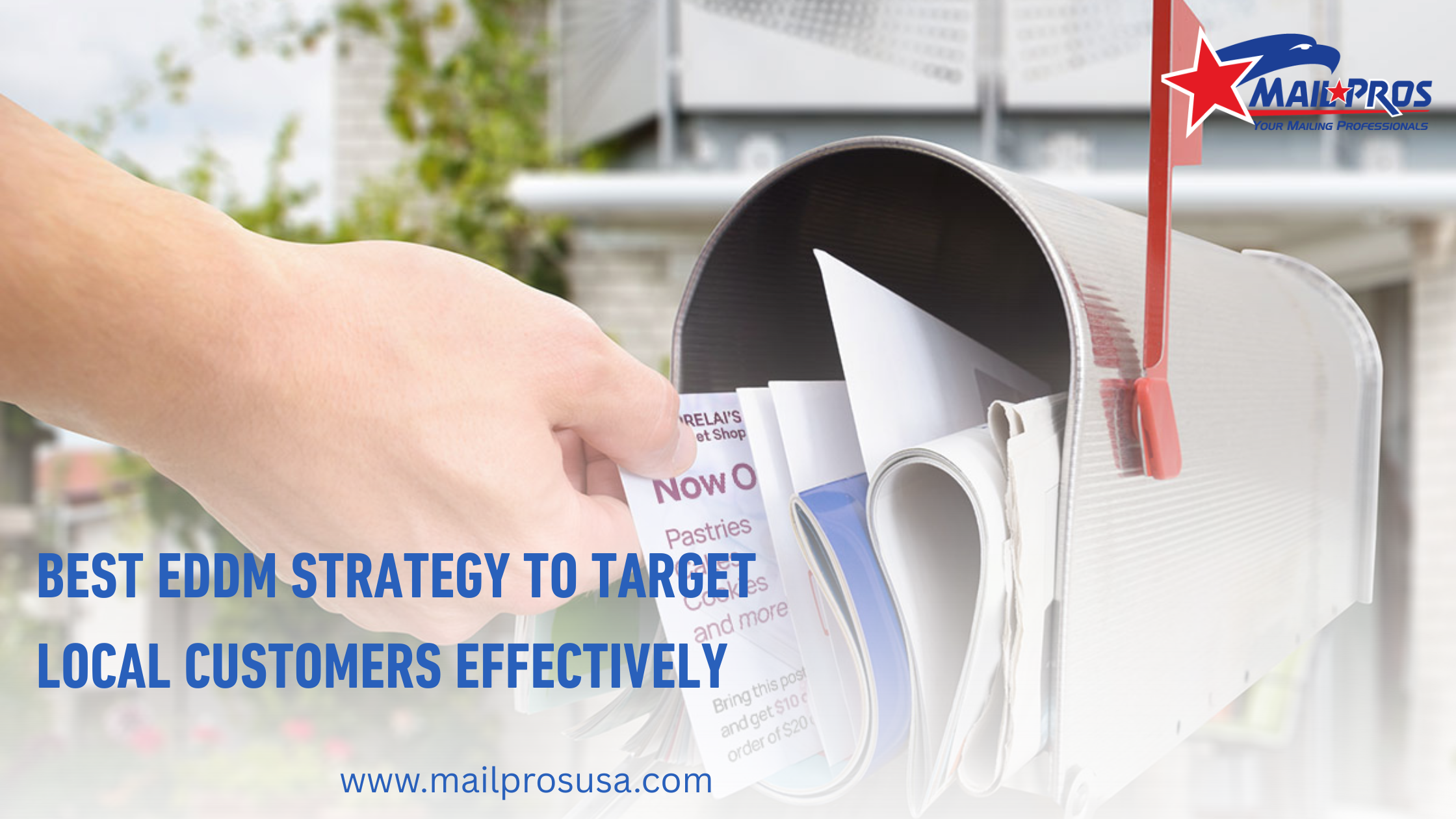
Every small business owner knows the frustration of spending money on marketing that feels invisible. You boost a post on social media, but it gets lost in the noise. You run a digital ad, but you aren’t sure if it’s actually reaching the people in your specific neighborhood. This is where a physical strategy often wins. When executed correctly, EDDM (Every Door Direct Mail) is one of the most powerful tools available for connecting with the community right outside your front door.
However, simply printing a flyer and sending it to everyone isn’t a strategy; it’s a gamble. Over my years in the printing and marketing industry, I have seen clients get incredible results with saturation mailing, and I have seen others flop. The difference is rarely the product itself it is almost always the strategy behind the campaign. To truly capture local customers, you have to move beyond “spray and pray” and start thinking about demographics, timing, and psychological triggers.
The Foundation: Knowing Who Your Neighbors Are
The biggest misconception about Every Door Direct Mail is that it is untargeted. While it is true that you aren’t buying a specific list of names, you are choosing specific carrier routes. A carrier route is the group of homes a single postal worker delivers to in a day. These routes are not random; they tend to be economically and socially consistent.
When we consult with clients at MailProsUSA, we emphasize that success starts with the map. You shouldn’t just pick the route closest to your store because it is convenient. You need to pick the route that matches your ideal customer profile. If you run a high-end landscaping business, you need to find routes with high homeownership rates and larger lot sizes. If you are a pizza shop, you might prioritize high-density apartment complexes.
Why Demographics Matter More Than Distance
Distance is a factor, but income and lifestyle are the deciders. I once worked with a pool cleaning company that mailed flyers to the three routes closest to their office. The campaign failed because two of those routes were primarily apartment buildings and townhomes without pools. By analyzing the route data first—looking at average household income and household size we could have shifted that budget to a neighborhood three miles away that was full of single-family homes, likely yielding a much higher return.
Designing for the Three-Second Rule
Once you have your audience selected, you have to grab their attention. When a homeowner pulls a stack of mail out of the box, they usually sort it over the recycling bin. You have about three seconds to save your postcard from the trash. This is not the place for subtle branding or paragraphs of text explaining your company history.
Your design needs to be a billboard, not a brochure. It requires a bold, high-resolution image that immediately communicates what you do, and a headline that addresses a specific pain point. If you are a dentist, don’t just put your logo at the top; use a headline like New to the Neighborhood? Your Family’s Dental Care Starts Here. Make it about them, not about you.
Crafting an Offer They Can’t Refuse
The most beautiful postcard in the world is useless without a hook. The offer is the engine of your EDDM strategy. We often ask clients is EDDM worth it for their specific business model, and the answer usually hinges on their ability to construct a compelling offer. A generic “10% off” usually isn’t enough to motivate a new customer to switch providers.
You need an “irresistible offer.” For a restaurant, this might be “Buy One, Get One Free.” For a service provider, it might be a fixed-price intro service, like “$49 AC Tune-Up.” The goal of the first mailing is rarely to make a huge profit; it is to acquire the customer. Once they are in your system, you can focus on retention and upsells.
Timing and Repetition: The Secret Sauce
One of the hardest conversations I have with business owners is explaining that one mailing is rarely enough. Marketing follows the “Rule of 7” a prospect typically needs to see a brand seven times before they trust it enough to buy. If you send one postcard and never follow up, you are relying on luck that the customer needed your exact service on that exact day.
Creating a Neighborhood Presence
A winning strategy involves consistency. It is better to mail to the same 1,000 homes three times than to mail to 3,000 homes once. When you show up in the mailbox repeatedly, you move from being a stranger to being a familiar neighborhood fixture. We recommend planning a three-drop campaign: an introduction, a follow-up reminder, and a “last chance” offer. This sequence builds familiarity and trust, significantly increasing your conversion rates.
Integrating Digital with Physical
The best modern EDDM strategies bridge the gap between the mailbox and the smartphone. Your postcard should not be a dead end; it should be an on-ramp to your digital presence. Including a QR code is practically mandatory today. It reduces friction, allowing the customer to scan and go directly to your booking page or menu without typing a URL.

Furthermore, you can use unique tracking numbers or landing pages for each route. This allows you to see exactly which neighborhoods are responding. If Route A generates 20 calls and Route B generates zero, you know exactly where to spend your budget next month. Data-driven decisions will always outperform gut feelings in local marketing.
FAQS
1. How often should I send out EDDM postcards?
Consistency is key. For most local businesses, a monthly or bi-monthly schedule works best. If you are launching a new business, hitting the same route every two weeks for the first six weeks can rapidly build brand awareness.
2. What is the best size postcard for an EDDM strategy?
Go big or go home. The 6.5″ x 9″ or the 9″ x 12″ cards are categorized as “flats” by the USPS. They physically stand out from standard envelopes and provide ample space for high-quality images and readable text.
3. Can I do EDDM myself, or do I need a pro?
You can do it yourself, but the USPS requirements for bundling, facing slips, and paperwork can be complicated and time-consuming. Using a professional provider ensures your mail is prepared correctly and doesn’t get rejected at the post office.
4. How do I track the ROI of my campaign?
Never send a postcard without a way to track it. Use a specific coupon code (e.g., “NEIGHBOR20”), a dedicated call-tracking phone number, or a QR code that leads to a unique landing page so you know exactly which leads came from the mail.
5. What industries see the best results with EDDM?
Businesses with broad local appeal perform best. This includes restaurants, real estate agents, home services (roofing, landscaping, HVAC), dentists, and gyms. Niche B2B products are usually better suited for targeted mailing lists.
6. Should I include pricing on my postcard?
Yes, transparency helps. If you have a special introductory price, highlight it. It filters out people who aren’t serious buyers and attracts those looking for a deal. Just ensure the price is clearly linked to a specific expiration date to create urgency.
Conclusion
Developing the best EDDM strategy for your business isn’t about finding a magic trick; it’s about understanding your local market and being persistent. By selecting the right routes based on data, designing high-impact cards that survive the “three-second rule,” and committing to a schedule of repetition, you can dominate your local area.
Direct mail offers a tangible connection that digital ads simply can’t replicate. It places your brand in the hands of your neighbors literally. If you are ready to refine your strategy or need more tips on growing your local footprint, be sure to check out our blog for more insights. Your community is waiting to hear from you; make sure your message is worth reading.