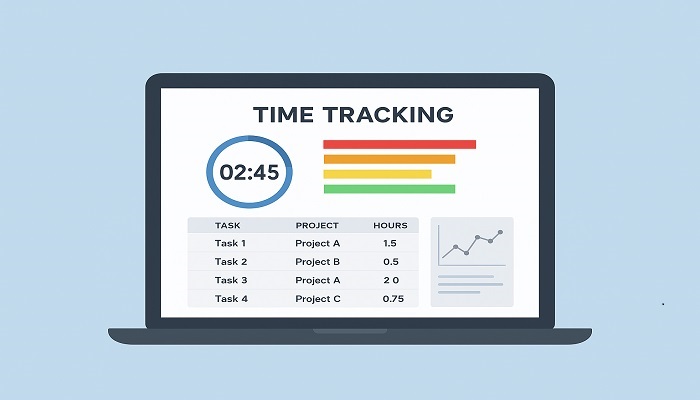
Time tracking has become a crucial part of managing efficiency—whether in freelance work, remote teams, or growing organizations. Yet despite its proven value, many people still hold misconceptions that prevent them from using it successfully. From fears of micromanagement to worries over accuracy, these myths can overshadow the benefits of time-tracking tools. In this blog, we’ll unpack and debunk the most common myths, helping you understand what time tracking really offers.
Myth #1: “Time tracking means my boss doesn’t trust me.”
One of the biggest fears among employees is that time tracking signals a lack of trust. But in reality, the goal of time tracking isn’t to spy—it’s to provide clarity.
Modern time tracking systems are designed to:
-
Help employees understand how they spend their working hours
-
Support better workload planning
-
Highlight inefficiencies that can reduce stress
When implemented transparently, time tracking becomes a tool for empowerment rather than surveillance. It helps everyone work smarter, not harder.
Myth #2: “Time tracking is only for micromanagers.”
Micromanagement happens when leaders focus on how people work rather than whether they deliver results. Time tracking, however, promotes visibility without interference.
Instead of manually checking progress, managers can use dashboards and reports that summarize work at a glance. This actually reduces micromanagement because leaders gain insights without hovering. It encourages autonomy, not control.
Myth #3: “Time tracking takes too long.”
Ironically, the people who push back against tracking time often claim they’re too busy to do it. But thanks to modern software, tracking takes seconds, not hours.
Most tools allow:
-
One-click start-and-stop timers
-
Automatic time entry based on app usage
-
Integrated tracking with project management platforms
The typical user spends less than a minute per day reviewing or adjusting their tracked time. The payoff in productivity and clarity far exceeds that investment.
Myth #4: “Time tracking is only for billable work.”
Time tracking is absolutely useful for agencies, freelancers, and consultants who want accurate invoices. But it’s equally valuable in non-billable environments.
Organizations of all kinds use time tracking to:
-
Improve scheduling
-
Deepen project insights
-
Reduce burnout
-
Identify bottlenecks
-
Track internal tasks like meetings, admin, planning, and training
Even personal productivity enthusiasts use time tracking to optimize how they spend their day. It’s simply a data-based way to understand effort versus outcomes.
Myth #5: “Time tracking is invasive.”
This concern usually arises when time tracking is confused with screen monitoring or corporate spying. But respectable time tracking software doesn’t track keystrokes, screenshots, or visible screens.
Time tracking simply answers three straightforward questions:
-
What task are you working on?
-
How long did it take?
-
Which client/project is it linked to?
Good time tracking supports accountability, not surveillance. Companies that track ethically share data openly, respect boundaries, and focus on work results rather than minute-by-minute movement.
Myth #6: “Time tracking hurts creativity.”
Many creative professionals worry that clocking their time will limit inspiration. But research shows that structure helps creativity flourish.
Time tracking helps creatives:
-
Understand when they’re most productive
-
Avoid last-minute panic and all-nighters
-
Estimate future projects more accurately
-
Set better boundaries so burnout doesn’t kill creativity
Creativity thrives when stress is minimized—and tracking helps eliminate the chaos.
Myth #7: “Time tracking is inaccurate.”
Time tracking can be inaccurate—if you rely on memory. Trying to recall your last eight hours at the end of the day? Yes, that will lead to mistakes.
But automated features in good software can capture:
-
Active app usage
-
Idle times
-
Mobile work activity
-
Project-specific timelines
When combined with quick manual inputs, time tracking becomes highly accurate and more reliable than guesswork.
Myth #8: “Time tracking means fewer breaks.”
If anything, the opposite is true.
When teams see where their time goes, they learn:
-
What is draining time unnecessarily
-
Which tasks can be delegated or eliminated
-
How to balance workload more evenly
Time tracking reveals opportunities for breaks by eliminating inefficiency, not preventing rest.
Many tools even remind users to take breaks—because productivity without wellness isn’t sustainable.
Myth #9: “Time tracking software is too expensive.”
Time tracking software comes in a wide range of price points—including free tools. But even paid tools often cost less than a daily cup of coffee.
When compared to:
-
Overtime expenses
-
Mismanaged tasks
-
Scope creep
-
Lost billable hours
Time tracking is a massive value-add. In many organizations, the data recovered from improved planning more than pays for the tool.
Myth #10: “We already know how time is spent—we don’t need software.”
Assumptions about workload rarely match reality.
Once companies start tracking, they often discover:
-
Projects take longer than expected
-
Meetings consume a surprising number of hours
-
Administrative tasks quietly drain productivity
-
Billable work isn’t as dominant as assumed
Not knowing where time goes leads to poor planning. Time tracking replaces guesswork with facts.
So, Why Use Time Tracking at All?
The benefits extend across industries and roles:
-
Improved productivity
-
More accurate project estimates
-
Better workload distribution
-
Transparent billing and reporting
-
Reduced burnout
-
Data-driven decision-making
When teams can see the patterns, they can change the patterns.
How to Introduce Time Tracking Successfully
The key is communication and clarity. Here’s what works:
-
Share why it’s being implemented
-
Focus on improving systems, not punishing individuals
-
Provide training and support
-
Review reports openly
-
Encourage feedback
-
Make improvements collaboratively
When time tracking becomes a shared tool rather than a top-down rule, everyone benefits.
Final Thoughts
Time tracking software has evolved dramatically in recent years. It’s not a corporate surveillance tool, a micromanagement device, or a hindrance to creativity. It’s a system that helps people work smarter, understand patterns, set realistic deadlines, and achieve more without burning out.
The myths surrounding time tracking often come from outdated perspectives or misunderstandings about how the tools function. When you take a closer look, the truth is simple: time tracking empowers both individuals and teams to do their best work.
In a world where time is one of our most valuable resources, understanding how we use it isn’t controlling—it’s liberating.