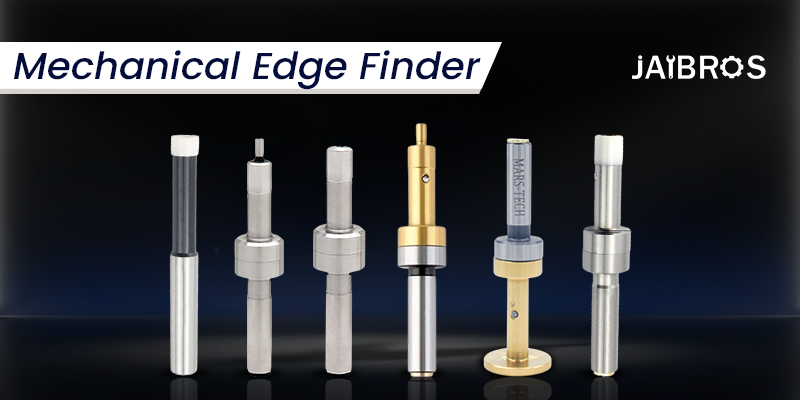
Selecting the Best Edge Finder Tool for Accurate CNC Setup
Choosing the correct setup tools is just as important as selecting cutting tools or programming strategies in CNC machining. Accurate workpiece referencing affects machining quality, cycle time, and overall productivity. Among setup tools, edge detection plays a critical role in defining precise zero points before machining begins.
An edge finder helps machinists accurately locate the boundaries of a workpiece, ensuring that CNC programs run exactly as intended.
Why Choosing the Right Tool Matters in CNC Machining
Every CNC machine operates based on coordinate systems. If the starting reference point is incorrect, even the most advanced CNC program can produce inaccurate parts. Selecting the wrong setup tool may result in:
- Longer setup times
- Inconsistent measurements
- Increased scrap and rework
- Reduced confidence during machining
By choosing the correct edge detection solution, machinists can improve repeatability, reduce errors, and maintain consistent quality.
Understand Your CNC Machine and Application
Before selecting any setup tool, it is important to evaluate your CNC machine and the type of work you perform.
Consider factors such as:
- Machine type (vertical, horizontal, or multi-axis)
- Production volume
- Required tolerange levels
- Material being machined
A shop producing high-precision components may require more sensitive detection compared to a general-purpose machining environment. Understanding these needs helps narrow down the right choice.
Mechanical vs Electronic Edge Detection Options
One of the first decisions involves choosing between mechanical and electronic detection methods. Each has its own advantages depending on the accuracy requirements.
Mechanical Edge Finder
A mechanical edge finder uses physical contact and visual movement to indicate when the tool touches the workpiece edge. It is popular because it is:
- Simple to use
- Cost-effective
- Durable for daily shop use
Mechanical versions are ideal for standard milling operations, manual machines, and CNC shops that require reliable performance without advanced electronics.
Electronic Edge Finder
An electronic finder uses electrical contact or sensors to detect edges with higher sensitivity. Key benefits include:
- Faster detection
- Reduced operator dependency
- Better repeatability for precision work
Electronic options are well-suited for CNC machines working with tight tolerances and frequent setup changes.
Consider Accuracy and Tolerance Requirements
Accuracy needs vary across industries and applications. For general machining, standard accuracy may be sufficient. However, industries such as aerospace, automotive, and medical manufacturing often require extremely tight tolerances.
Using an edge finder that matches your accuracy requirements ensures reliable results without over-investing in unnecessary features. Always select a tool that meets or slightly exceeds your tolerance needs.
Evaluate Ease of Use and Operator Skill Level
Ease of use is an important factor, especially in shops with multiple operators or varying skill levels.
Mechanical tools provide clear visual feedback and are easy for beginners to understand. Electronic tools, while slightly more advanced, often reduce human error by providing direct signals such as lights or sounds.
Choosing a user-friendly solution improves consistency across shifts and operators.
Compatibility with Materials and Workpieces
Different materials may require different detection methods. Mechanical tools work effectively on most materials, including metals and plastics. Electronic versions often require conductive materials to function properly.
Before purchasing, ensure the chosen tool is compatible with the materials you commonly machine. A properly selected edge should perform reliably across your typical jobs.
Durability and Build Quality
Shop-floor tools are exposed to vibration, coolant, chips, and frequent handling. Durability is essential for long-term performance.
Look for:
- High-quality construction
- Wear-resistant tips
- Reliable internal components
Investing in a durable edge reduces replacement costs and maintains consistent accuracy over time.
Cost vs. Long-Term Value
While price is always a consideration, it should not be the only deciding factor. Low-cost tools may lack consistency or wear out quickly, leading to inaccurate setups and increased downtime.
A slightly higher initial investment in a reliable edge finder often results in better long-term value through reduced errors, faster setup, and improved productivity.
Shop Environment and Production Volume.
High-volume production environments benefit from faster and more repeatable setup tools. Electronic options may be more suitable where speed and consistency are critical.
In contrast, job shops or prototype environments may prefer mechanical solutions due to flexibility and lower cost. Matching the tool to your production style ensures efficient workflows.
Maintenance and Calibration Needs
Regular inspection and proper storage extend the life of setup tools. Mechanical tools require minimal maintenance, while electronic options may need occasional battery checks or sensor inspection.
Choosing an edge finder with manageable maintenance requirements helps maintain accuracy without adding complexity to daily operations.
Making the Final Selection
The right choice depends on balancing accuracy, usability, durability, and cost. There is no one-size-fits-all solution, but a thoughtful evaluation of your machining needs will lead to better results.
A well-chosen edge finder becomes a dependable part of your CNC setup process, supporting accurate machining and efficient production.
Conclusion
Selecting the right edge detection solution is a key step toward improving CNC machining accuracy and efficiency. By understanding machine requirements, application needs, and tool features, machinists can make informed decisions that enhance productivity and reduce errors.
About Jaibros:
Jaibros is a trusted provider of high-quality CNC cutting and measuring solutions. With a strong focus on precision, durability, and performance, Jaibros supports manufacturers with reliable tools designed for modern machining environments.
FAQs
- Why is edge detection important in CNC machining?
It ensures accurate workpiece referencing, which directly affects machining accuracy and consistency.
- Which option is better for beginners: mechanical or electronic?
Mechanical options are easier to understand and ideal for beginners.
3. Are electronic detection tools more accurate?
They generally offer higher sensitivity and faster detection for precision applications.
4. Can one tool be used for different CNC machines?
Yes, as long as it meets the machine’s accuracy and compatibility requirements.
5. How often should setup tools be inspected?
Regular inspection is recommended to maintain accuracy and reliable performance.
