Across India, the challenge of waste management and pollution grows by the day. Left unchecked, organic waste — cow dung, kitchen waste, slurry from farms and gaushalas — contributes to foul smell, methane emissions, and environmental hazards. But what if this very waste could be transformed into clean, renewable fuel? That is precisely the vision behind Bio-CNG, and organisations like Krishnayan are turning that vision into reality.
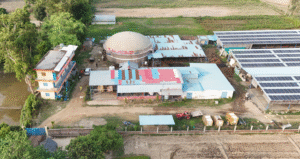
What is Bio-CNG — and Why It Matters
Bio-CNG (or compressed biomethane) is a renewable fuel produced by processing organic waste — cow dung, farm slurry, biodegradable refuse — through anaerobic digestion, then purifying and compressing the resulting biogas to a quality similar to conventional CNG/Natural Gas. Because it is derived from waste and not fossil fuels, Bio-CNG offers a far cleaner alternative. Its use can significantly reduce greenhouse-gas emissions compared to petrol, diesel, or even traditional fossil-CNG.
Besides energy, Bio-CNG production yields organic manure — a high-quality, chemical-free fertiliser that enriches soil and supports organic farming. This makes Bio-CNG plants a two-in-one boon: clean fuel and sustainable agriculture.
Krishnayan’s Work: Waste Management, Cow Welfare, and Clean Energy
Krishnayan — better known for its gaushala and preservation of desi cows — has expanded its vision into environmental sustainability through its Bio & Organic Fertilizer Unit and Bio-CNG plant. Instead of letting cow dung and slurry go to waste, Krishnayan treats them as valuable resources. The waste is collected, processed in digesters, converted into biogas, purified and compressed into Bio-CNG, and simultaneously converted into organic manure for distribution to farmers.
In doing so, Krishnayan addresses multiple problems at once: cattle waste does not pollute the surroundings; waste disposal becomes an organised process; the gaushala becomes more self-sustaining; and local farmers get chemical-free fertiliser — all while contributing to clean energy production.
How a Bio-CNG Plant Works
A simplified flow of steps in a Bio-CNG plant is as follows:
- Collect organic waste — cow dung, slurry, farm waste, biodegradable refuse.
- Feed this waste into an anaerobic digester, where microbes break it down in absence of oxygen. This generates raw biogas (methane-rich).
- Purify the raw biogas by removing carbon dioxide, moisture, and other impurities. This yields high-purity methane (biomethane).
- Compress the purified biomethane to produce Bio-CNG — comparable to fossil-CNG in composition and energy content.
- Use residual slurry after digestion as organic fertiliser — a valuable by-product for agriculture.
This process makes Bio-CNG plants a zero-waste model: waste becomes fuel and fertiliser, and harmful emissions are greatly reduced.
The Benefits — For Environment, Farmers, and Energy Security
- Cleaner Air and Lower Pollution: Vehicles and generators using Bio-CNG emit far less pollution — reduced nitrogen oxides, particulate matter, carbon monoxide compared to diesel or petrol. This helps improve air quality and reduces health risks.
- Waste Management & Sanitation: Instead of dumping waste in landfills or letting manure accumulate near gaushalas or farms, Bio-CNG plants convert that waste into useful resources. This reduces smell, contamination and the burden on municipal waste systems.
- Renewable, Sustainable Fuel: Bio-CNG is renewable, produced from waste materials that are abundantly available in rural and urban India. Thus, dependence on fossil-fuels decreases, supporting long-term energy security.
- Support for Organic Farming: The residual waste after gas extraction becomes rich organic manure. This helps farmers shift from chemical fertilisers to natural ones — improving soil health, crop yields, and reducing harmful chemicals in food. Krishnayan uses this manure to support organic farming initiatives.
- Rural Employment & Sustainable Development: Setting up and running Bio-CNG plants — collecting waste, managing digesters, distributing fuel and manure — creates jobs. This is especially beneficial in rural or agrarian regions where cattle and farm waste are abundant.
Why Krishnayan’s Model Matters for India
India has a large population of cattle, many gaushalas, and rural communities producing tonnes of cow dung and organic waste daily. Yet much of this waste remains unmanaged. A model like Krishnayan’s shows that it is possible to combine animal welfare, waste management, clean energy, and sustainable agriculture — all under one umbrella.
Moreover, as concerns about air pollution, chemical farming, and fossil fuel dependence grow, Bio-CNG presents a locally relevant, low-cost, green alternative. With support from communities and perhaps government incentives, more such plants can come up — reducing pollution, improving rural livelihoods, and supporting organic farming across India.
Challenges — And What Needs to Be Done
Of course, Bio-CNG plants need constant supply of organic waste — cow dung, farm slurry or biodegradable waste. Without that feedstock, even the best plant will stall. So consistent collection systems, community cooperation, and disciplined waste segregation are essential.
Also, setting up a full-scale Bio-CNG plant involves investment — in digesters, purification units, compressors, storage cylinders. It needs technical know-how and careful maintenance.
Finally, for wider adoption — in vehicles, cooking, or electricity generation — infrastructure must exist: fuelling stations, pipelines or cylinder distribution, awareness among people.
A Hopeful Path Forward
Despite the challenges, the success of plants like Krishnayan’s shows that Bio-CNG is not just a dream — it is a practical, sustainable solution for India’s waste, energy, and farming problems.
For families with cattle, farmers, gaushalas, or even municipal bodies — Bio-CNG offers a way to convert waste into wealth. For the environment — less pollution, cleaner air, healthier soil. For the future — a step towards sustainable energy, organic farming, and a cleaner India.
If more communities embrace this model — collect waste, build digesters, support cattle welfare, distribute manure — the combined impact could be massive. Bio-CNG plants could power vehicles, run generators, provide cooking fuel, and nurture farms — all while healing the land.
In the journey towards a greener, cleaner India, Krishnayan’s Bio-CNG initiative shines as a hopeful example. If we listen, act, and support such efforts, we might just turn India’s waste problem into its greatest opportunity.