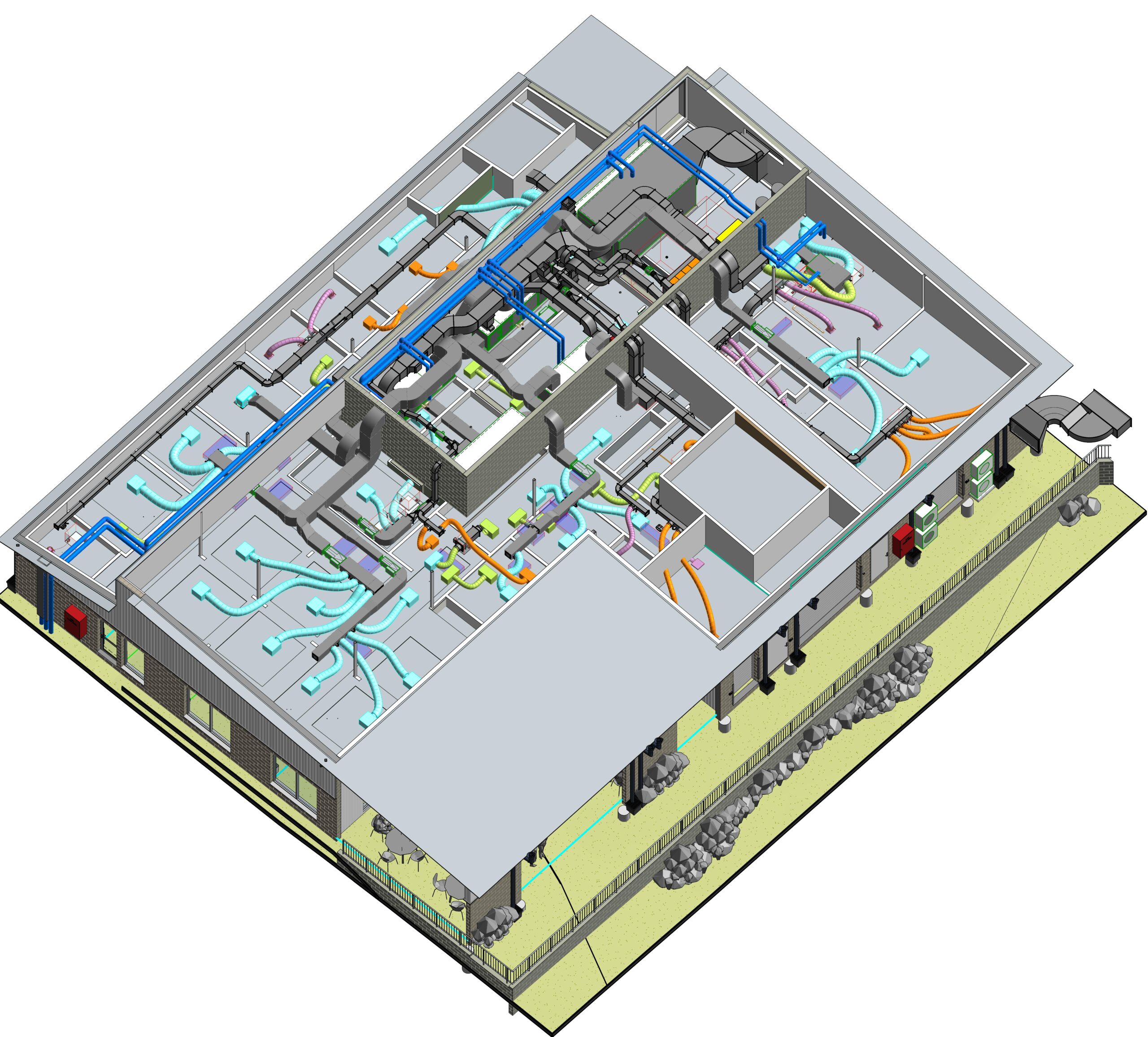
The architecture, engineering, and construction (AEC) industry is undergoing a significant transformation. Traditional 2D blueprints are being replaced by dynamic, data-rich 3D models that offer unprecedented insight and control over building projects. At the forefront of this shift are MEP BIM services, a specialized approach that is fundamentally changing how we design, construct, and manage the complex systems that bring buildings to life.
For AEC professionals, staying competitive means embracing technologies that drive efficiency, reduce costs, and improve project outcomes. Building Information Modeling (BIM) has already proven its value, but its application within the Mechanical, Electrical, and Plumbing (MEP) disciplines is where some of the most profound benefits are realized. This post will explore the world of MEP BIM services, detailing what they are, the advantages they offer, and how they are shaping the future of building design.
By understanding the power of MEP BIM, firms like Archdraw Outsourcing are helping architects, engineers, and contractors deliver projects that are not only more sustainable and cost-effective but also better aligned with the needs of modern occupants.
What Exactly Are MEP BIM Services?
MEP BIM services involve creating and managing detailed 3D models of a building’s Mechanical, Electrical, and Plumbing systems. Unlike traditional 2D drawings, these models are intelligent and data-rich, containing a wealth of information about each component.
Let’s break down the core components:
- Mechanical (M): This includes the heating, ventilation, and air conditioning (HVAC) systems. In a BIM model, this covers everything from large equipment like air handling units and chillers to the intricate network of ductwork and piping. The model contains data on equipment specifications, airflow rates, and maintenance requirements.
- Electrical (E): This component covers a building’s entire electrical system, including lighting, power distribution, fire alarms, and communication networks. The BIM model details the location of outlets, switches, light fixtures, and the routing of conduits and wiring, along with information on circuit loads and panel schedules.
- Plumbing (P): This refers to the water supply and drainage systems. A BIM model for plumbing maps out all pipes, fixtures (sinks, toilets, showers), and equipment like water heaters and pumps. It includes data on pipe sizes, material types, and flow rates, ensuring efficient and code-compliant design.
By integrating these three disciplines into a single, coordinated model, MEP BIM services provide a holistic view of a building’s most critical systems. This unified approach allows for early detection of conflicts, streamlined collaboration, and more informed decision-making throughout the project lifecycle.
The Transformative Benefits of MEP BIM
Integrating MEP BIM services into a building project offers a wide array of advantages that extend from the initial design phase through to construction and long-term facility management.
Enhanced Coordination and Clash Detection
One of the most significant benefits is the ability to identify and resolve conflicts before construction begins. In a complex building, mechanical ducts, electrical conduits, and plumbing pipes all compete for limited space. In traditional 2D design, these clashes often go unnoticed until workers are on-site, leading to costly delays and rework.
MEP BIM software automatically detects these clashes—for instance, a duct running through a structural beam or a pipe conflicting with an electrical tray. By visualizing these issues in the 3D model, design teams can coordinate to find solutions early, saving valuable time and resources.
Improved Accuracy and Efficiency
BIM models are far more than just 3D pictures; they are databases of precise information. Every component is represented with accurate dimensions, specifications, and spatial requirements. This level of detail minimizes guesswork and reduces the potential for human error.
Firms specializing in MEP BIM services, like Archdraw Outsourcing, can generate highly accurate construction documents, material take-offs, and cost estimates directly from the model. This automation streamlines workflows and allows project teams to operate with greater efficiency.
Cost and Time Savings
The ability to pre-emptively solve problems on-screen rather than on-site translates directly into financial savings. Rework is one of the biggest drains on a construction budget, and clash detection is a powerful tool for eliminating it.
Furthermore, the precise material quantities generated from the BIM model help optimize procurement and reduce waste. By simulating construction sequencing, project managers can also develop more realistic timelines, leading to smoother project execution and fewer delays.
Better Collaboration Among Stakeholders
BIM creates a single source of truth that all project stakeholders—architects, engineers, contractors, and owners—can access. This shared model fosters a collaborative environment where information flows freely and decisions are made collectively. When an electrical engineer moves a light fixture, the mechanical engineer can immediately see how it impacts the surrounding ductwork. This real-time coordination is essential for modern, fast-paced construction projects.
Superior Facility Management
The value of MEP BIM services extends far beyond project completion. The final “as-built” model serves as a digital twin of the building, providing facility managers with a comprehensive database of all MEP systems. When a piece of equipment needs maintenance, managers can access the model to find its exact location, view its specifications, and pull up its service history. This makes ongoing operations and maintenance far more efficient.
Real-World Impact: MEP BIM in Action
The theoretical benefits of MEP BIM services are best understood through real-world application. Consider a large-scale hospital project, where MEP systems are exceptionally complex. The building must support life-saving medical equipment, specialized ventilation for operating rooms, and extensive plumbing and electrical networks.
Using traditional methods, coordinating these systems would be a monumental task, fraught with the risk of error. By implementing an MEP BIM workflow, the project team can model every system in detail. They can run clash detection reports daily to ensure that intricate networks of medical gas pipes do not conflict with HVAC ducts or structural elements. The model allows them to pre-fabricate large sections of ductwork and piping off-site with confidence, knowing they will fit perfectly during installation. The result is a faster, more cost-effective construction process and a higher-quality facility that is easier to maintain over its lifespan.
The Future of MEP BIM Services
The technology behind MEP BIM is continually evolving. Future trends point toward even greater integration and intelligence. We can expect to see advancements in several key areas:
- AI and Generative Design: Artificial intelligence will play a bigger role in optimizing MEP layouts. Generative design tools will be able to propose thousands of design options based on predefined constraints like cost, energy efficiency, and material usage, helping engineers find the best possible solutions.
- IoT Integration: Connecting the BIM model to the Internet of Things (IoT) will create truly “smart” buildings. Sensors embedded in MEP equipment can feed real-time performance data back into the digital twin, enabling predictive maintenance and optimizing energy consumption.
- Prefabrication and Robotics: The detailed data from MEP models will drive an increase in off-site prefabrication. Robots on the construction site, guided by BIM data, will perform tasks like drilling holes for pipe hangers with surgical precision.
The Clear Choice for Modern Construction
MEP BIM services are no longer a niche technology but a foundational element of modern building design and construction. The ability to create coordinated, data-rich models of a building’s most complex systems delivers tangible benefits in efficiency, cost savings, and quality.
For AEC professionals looking to deliver superior projects, adopting a robust BIM strategy is essential. By partnering with experienced providers like Archdraw Outsourcing, firms can leverage specialized expertise to unlock the full potential of MEP BIM and secure a competitive edge. The revolution is already here, and it’s being built one intelligent model at a time.