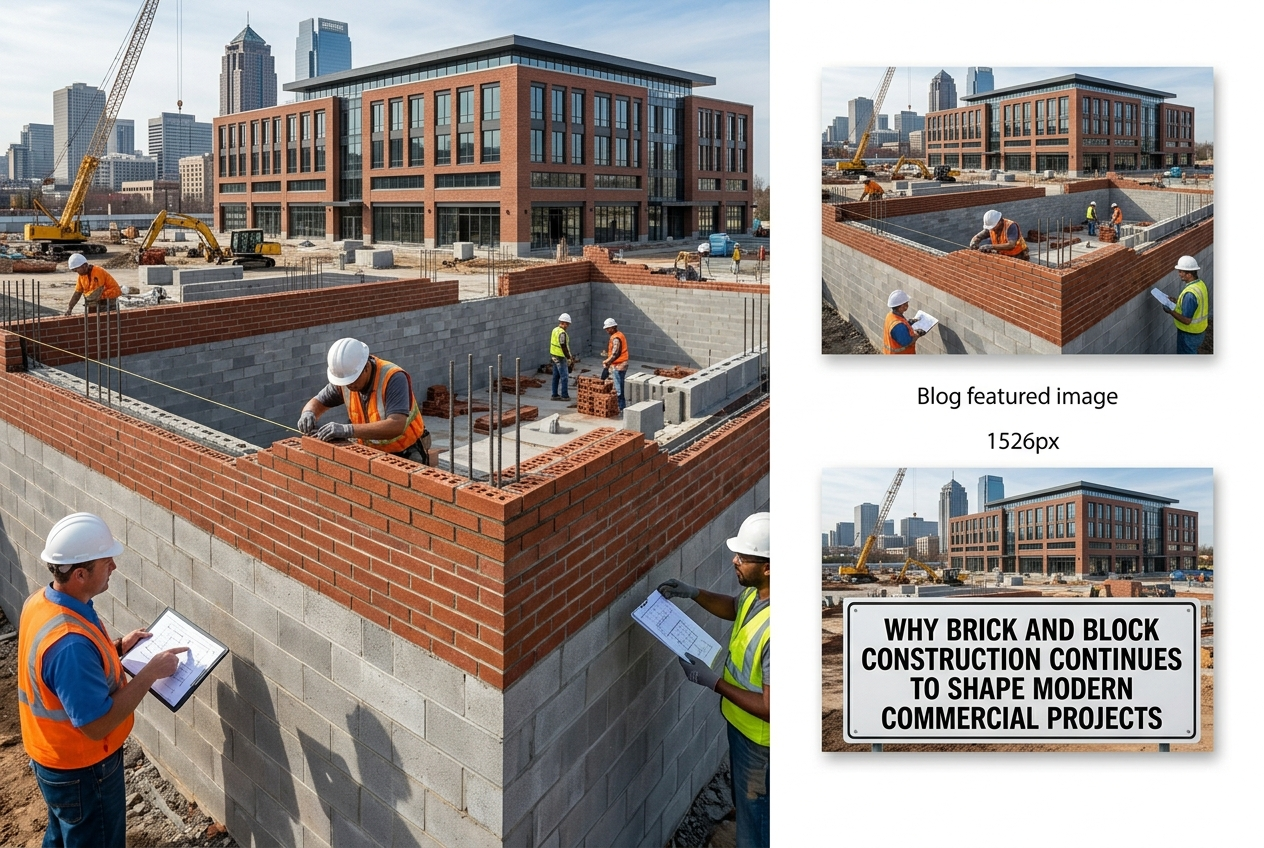
Why Brick and Block Construction Continues to Shape Modern Commercial Projects
Commercial construction has evolved significantly over the past few decades, with new technologies, materials, and design methods changing how buildings are planned and developed. Despite those changes, brick and block construction continues to play a major role in projects that require durability, efficiency, and long-term performance.
From retail centers and industrial facilities to schools and multifamily developments, masonry systems remain one of the most reliable building methods available. Builders and property owners continue choosing brick and block construction because it offers practical advantages that extend far beyond appearance alone.
The Strength Behind Brick and Block Systems
Brick and concrete block materials have long been trusted for their structural reliability. Commercial buildings face constant stress from weather, heavy use, and environmental exposure, making material selection a critical part of the construction process.
Brick and block systems are commonly valued for:
-
Long service life
-
Strong resistance to impact
-
Fire-resistant properties
-
Low maintenance requirements
-
Weather durability
-
Consistent structural performance
Unlike some lightweight construction systems, masonry provides a sense of permanence and stability that many commercial property owners prioritize.
Why Commercial Developers Continue Choosing Masonry
Developers often evaluate building materials based not only on upfront construction costs but also on long-term ownership expenses. A material that performs well for decades may ultimately deliver greater value than one that requires frequent repairs or replacement.
Brick and block construction can help reduce long-term concerns related to:
Exterior Wear
Commercial buildings experience constant exposure to sunlight, wind, moisture, and public traffic. Masonry surfaces typically withstand these conditions better than many alternative materials.
Maintenance Costs
Masonry generally requires less repainting, patching, or replacement over time.
Structural Reliability
Concrete block systems offer dependable performance in demanding commercial environments.
Fire Protection
Many masonry materials naturally provide strong fire-resistant characteristics, which can support overall building safety.
These advantages help explain why masonry remains common in healthcare facilities, schools, industrial buildings, apartment communities, and public infrastructure projects.
Brick and Block in Modern Design
Masonry is often associated with traditional architecture, but modern commercial projects increasingly use brick and block in contemporary ways.
Architects now incorporate masonry into:
-
Clean-lined retail storefronts
-
Mixed-material office exteriors
-
Industrial-modern developments
-
Decorative site walls
-
Multifamily housing communities
-
Outdoor gathering spaces
Advances in masonry products have expanded the range of available textures, colors, finishes, and patterns. This allows designers to create buildings that feel both modern and durable.
The Importance of Skilled Installation
Even the best materials depend on proper workmanship. Brick and block construction requires precision, planning, and technical expertise throughout every phase of installation.
Experienced masonry crews understand how to manage:
-
Structural reinforcement
-
Mortar consistency
-
Alignment and layout
-
Moisture control
-
Expansion joints
-
Site safety requirements
-
Coordination with other trades
In commercial construction, scheduling and coordination are especially important because delays can affect multiple phases of the project.
For developers and contractors evaluating regional construction expertise, working with a Central Valley brick and block contractor can provide insight into masonry systems designed for the area’s development conditions and project demands.
Masonry’s Role in Multifamily and Mixed-Use Growth
As multifamily housing and mixed-use developments continue expanding throughout California’s inland regions, masonry remains a popular choice for both structural and decorative applications.
Brick and block are often used for:
-
Stair towers
-
Site walls
-
Trash enclosures
-
Leasing offices
-
Exterior accents
-
Courtyard structures
-
Retaining walls
These features must hold up under constant daily use while maintaining a clean appearance for residents and visitors.
Masonry helps support both goals by combining durability with architectural flexibility.
Industrial and Commercial Applications
Industrial facilities place heavy demands on construction materials. Warehouses, manufacturing centers, and logistics properties often prioritize masonry because it performs well in high-traffic environments.
Concrete block systems can help support:
-
Equipment protection
-
Security
-
Fire resistance
-
Long-term structural durability
-
Reduced maintenance needs
Retail and office projects also benefit from masonry’s ability to create polished, professional exteriors that remain visually appealing over time.
Long-Term Sustainability Considerations
Sustainability has become increasingly important in commercial construction planning. While building strategies vary by project, masonry can contribute to long-term sustainability goals in several ways.
Durability Reduces Waste
Materials that last longer typically reduce replacement frequency and construction waste.
Energy Efficiency Potential
Masonry walls may help support thermal stability in certain building designs.
Reduced Maintenance Resources
Lower maintenance demands can reduce the need for additional materials, coatings, and repairs over time.
Recyclable Components
Some masonry materials can be recycled or repurposed after demolition.
Because of these qualities, masonry continues to align with many developers’ long-term building strategies.
Planning for Successful Masonry Projects
Strong masonry outcomes begin with careful planning and communication. Before construction starts, project teams should evaluate:
-
Structural requirements
-
Material selections
-
Site access conditions
-
Drainage and moisture management
-
Inspection timelines
-
Coordination with framing and utilities
Early planning helps reduce delays and supports better overall project efficiency.
Conclusion
Brick and block construction continues to be a trusted part of modern commercial development because it offers a dependable combination of durability, performance, and design flexibility. Whether used in multifamily housing, industrial facilities, retail centers, or public infrastructure, masonry systems provide long-term value that many alternative materials struggle to match.
As development continues throughout California’s Central Valley, builders and property owners remain focused on creating structures that are built to last. Brick and block masonry continues to meet that need by supporting strong, attractive, and reliable commercial construction for years to come.