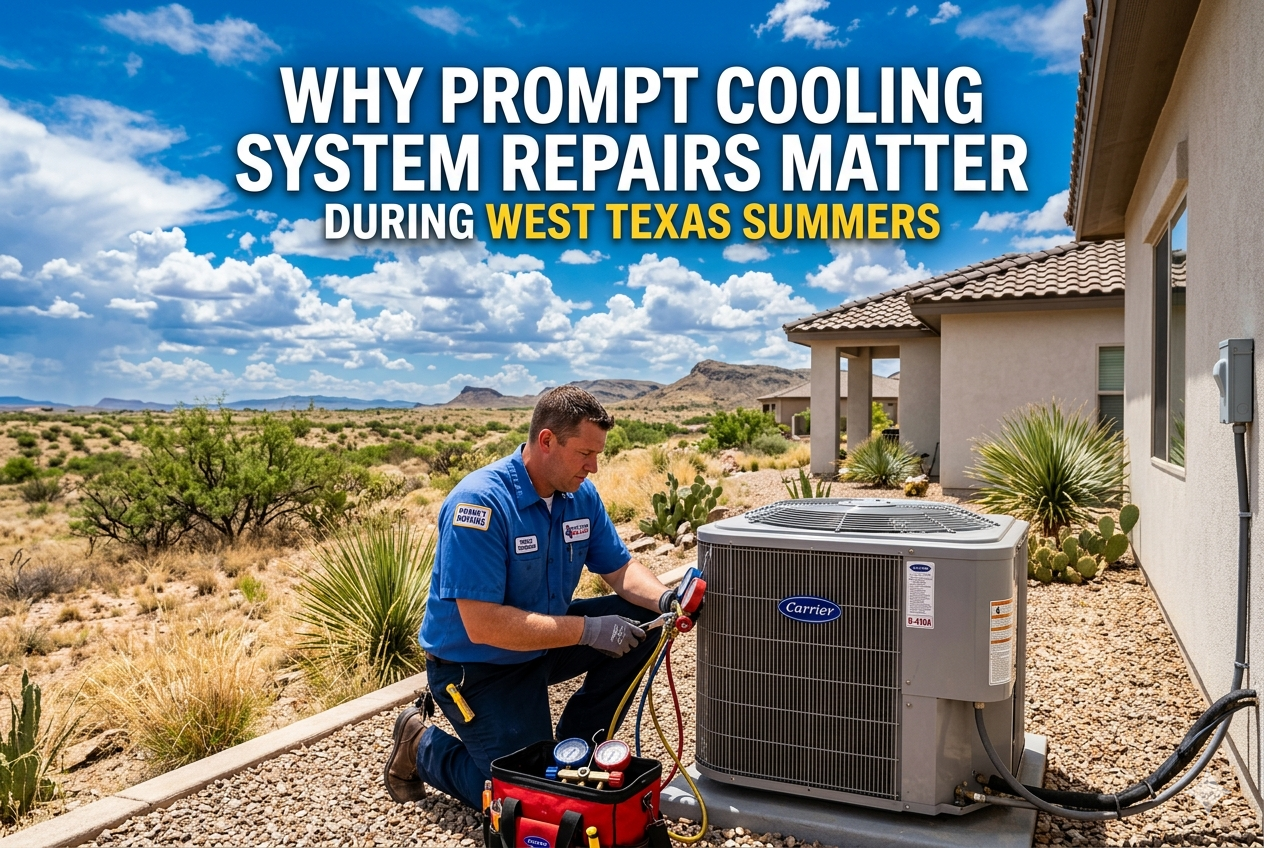
Why Prompt Cooling System Repairs Matter During West Texas Summers
In Odessa, Texas, cooling systems are essential for maintaining indoor comfort during long periods of extreme summer heat. Air conditioners often run daily for extended hours, especially during peak summer months when outdoor temperatures remain high well into the evening. Because these systems work under constant demand, even minor HVAC issues can quickly affect comfort, energy efficiency, and long-term equipment performance.
Many cooling problems begin gradually. Weak airflow, uneven temperatures, unusual noises, or increasing utility bills are often early signs that the system is already under strain. If these warning signs are ignored, small issues may eventually lead to larger repairs or complete system breakdowns during the hottest times of the year.
Understanding how West Texas climate conditions affect cooling systems can help homeowners respond early, improve system efficiency, and reduce long-term repair costs.
Why West Texas Climate Is Hard on Cooling Systems
The Odessa environment creates several challenges for residential cooling equipment. Long cooling seasons, dry air, airborne dust, and high attic temperatures all contribute to increased HVAC wear over time.
Several environmental factors affect cooling system performance:
-
Continuous summer cooling cycles
-
Dust accumulation around outdoor units
-
High attic temperatures
-
Dry environmental conditions
-
Aging insulation in older homes
-
Heavy airflow demands during extreme heat
These conditions place additional strain on compressors, blower motors, evaporator coils, thermostats, electrical systems, and ductwork.
Even newer HVAC systems can lose efficiency quickly if maintenance and airflow issues are neglected.
Common Signs a Cooling System Needs Repair
Most HVAC systems provide warning signs before serious mechanical failures occur. Recognizing these symptoms early can help homeowners avoid expensive emergency repairs later.
Weak Airflow
Reduced airflow from vents may indicate clogged filters, dirty coils, blower motor issues, or damaged ductwork.
Uneven Cooling
If some rooms remain warmer than others, airflow restrictions or duct leakage may be reducing system performance.
Frequent Cycling
Cooling systems that repeatedly turn on and off may be struggling with thermostat calibration, restricted airflow, or declining efficiency.
Rising Utility Bills
Unexpected increases in electricity usage often signal that the cooling system is working harder than necessary.
Strange Sounds or Odors
Buzzing, rattling, squealing, or burning smells should never be ignored, as they may indicate electrical or mechanical problems.
Airflow Problems Often Reduce Cooling Efficiency
Many homeowners focus primarily on the outdoor AC unit when comfort issues appear. However, airflow problems inside the home are among the most common causes of declining HVAC performance.
Poor airflow may result in:
-
Hot and cold spots between rooms
-
Frozen evaporator coils
-
Increased utility costs
-
Reduced indoor comfort
-
Excessive strain on HVAC components
-
Poor air circulation
Older homes in Odessa frequently contain aging duct systems that may have developed leaks, crushed sections, or insulation deterioration over time.
Improving airflow often increases comfort and efficiency without requiring full equipment replacement.
Dust Creates Ongoing HVAC Challenges
West Texas dust continuously affects residential cooling systems. Fine airborne particles settle into outdoor condenser units, ductwork, filters, and indoor components throughout the year.
Dust buildup may cause:
-
Restricted airflow
-
Dirty evaporator coils
-
Reduced cooling efficiency
-
Increased indoor allergens
-
Overheating HVAC components
-
Higher operating costs
Homes near open land, construction areas, or unpaved roads may experience even greater dust accumulation.
Routine cleaning and regular filter replacement help reduce the long-term effects of debris buildup.
Why Delaying Repairs Often Leads to Bigger Problems
Small HVAC issues rarely remain small for long. When cooling systems continue operating under strain, additional components may begin to fail.
For example:
-
Restricted airflow may freeze evaporator coils
-
Dirty coils may overheat compressors
-
Electrical issues may damage blower motors
-
Refrigerant leaks may reduce cooling capacity
Addressing problems early often lowers overall repair costs while helping extend equipment lifespan.
Preventive Maintenance Helps Reduce Cooling System Failures
Routine maintenance is one of the most effective ways to reduce HVAC breakdowns during peak summer temperatures. Seasonal inspections allow technicians to identify worn components before they fail under heavy cooling demand.
Professional cooling system maintenance typically includes:
-
Cleaning condenser and evaporator coils
-
Inspecting electrical connections
-
Checking refrigerant levels
-
Replacing or cleaning filters
-
Measuring airflow performance
-
Testing thermostat operation
-
Inspecting ductwork for leaks or restrictions
Regular maintenance improves efficiency while reducing unnecessary wear on HVAC equipment.
Indoor Air Quality Depends on HVAC Health
Cooling systems affect more than indoor temperature alone. Airflow and filtration also influence indoor air quality throughout the home.
When HVAC systems become dirty or airflow becomes restricted, homeowners may notice:
-
Excess indoor dust
-
Allergy irritation
-
Dry indoor air
-
Lingering odors
-
Uneven humidity levels
-
Stale airflow
Maintaining clean HVAC components and proper airflow can significantly improve indoor comfort while reducing airborne debris indoors.
Older Homes Often Need Additional HVAC Attention
Many older homes in Odessa were built with duct systems and insulation standards that no longer meet modern efficiency expectations.
Common issues found in older homes include:
-
Leaking duct systems
-
Poor attic insulation
-
Aging blower motors
-
Outdated thermostats
-
Restricted return airflow
-
Uneven air distribution
These hidden problems often force cooling systems to work harder while increasing monthly utility costs and reducing comfort.
Homeowners searching for dependable Odessa cooling system repair often benefit from HVAC providers who evaluate the entire system rather than focusing only on the outdoor unit.
Choosing the Right HVAC Repair Provider
Selecting the right HVAC company involves more than simply comparing prices. Accurate diagnostics, airflow evaluation, and preventive maintenance support all contribute to long-term system reliability.
Homeowners should look for HVAC providers that offer:
-
Thorough inspections
-
Airflow evaluations
-
Preventive maintenance plans
-
Transparent recommendations
-
Experience with West Texas climate conditions
-
Clear communication without unnecessary pressure
Technicians familiar with Odessa’s environmental challenges are often better equipped to identify hidden causes of recurring cooling problems.
Conclusion
Cooling systems in Odessa operate under demanding conditions throughout much of the year. Extreme temperatures, airborne dust, aging ductwork, and continuous system usage all contribute to gradual wear and declining efficiency over time. While many HVAC problems begin subtly, early repairs and routine maintenance can significantly improve comfort, reliability, and long-term performance.
By working with experienced HVAC professionals who understand West Texas climate conditions, homeowners can reduce repair costs, improve indoor comfort, and keep their cooling systems operating reliably throughout the hottest months of the year.